
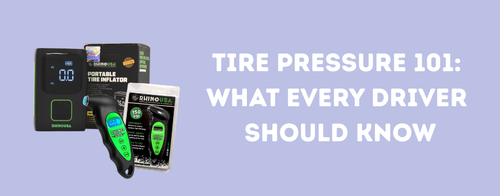
Tire Pressure 101: What Every Driver Should Know
Posted by Sydney Selleck on Aug 17th 2026
Your tires are one of the most important parts of your vehicle, but tire pressure is something that’s easy to overlook. Keeping your tires properly inflated can help your vehicle handle better, improve fuel efficiency, promote even tire wear, and help keep you safe on the road.
The good news? Checking your tire pressure is quick and easy—and it’s a habit worth adding to your regular car care routine.
What Is Tire Pressure?
Tire pressure is the amount of air inside your tires, measured in pounds per square inch (PSI). Every vehicle has a recommended tire pressure determined by the manufacturer.
You can typically find your vehicle’s recommended PSI on the label inside the driver’s door jamb. It may also be listed in your owner’s manual.
One important tip: Don't use the number printed on the tire's sidewall as your vehicle's recommended pressure. That number generally indicates the tire's maximum pressure, not the pressure your vehicle should be running.
Why Does Proper Tire Pressure Matter?
1. It Can Improve Fuel Efficiency
When your tires are underinflated, more of the tire comes into contact with the road. This increases rolling resistance, meaning your engine has to work harder to move the vehicle.
Maintaining the recommended tire pressure can help your vehicle operate more efficiently.
2. It Helps Your Tires Wear Evenly
Incorrect tire pressure can cause uneven wear across the tread.
Underinflated tires tend to wear more along the outer edges, while overinflated tires can wear more toward the center. Keeping your tires at the recommended pressure can help maximize their usable life.
3. It Can Affect Handling
Your tires play a major role in how your vehicle responds to steering, braking, and changes in road conditions. Proper inflation helps your tires maintain the intended contact with the road.
If your tire pressure is significantly too low or too high, you may notice changes in handling or ride quality.
4. It Can Help With Safety
Properly inflated tires are better equipped to perform as designed. Driving with severely underinflated tires can increase heat buildup and place additional stress on the tire.
Regularly checking your tire pressure is a simple way to stay ahead of a potentially bigger problem.
How Often Should You Check Your Tire Pressure?
A good rule of thumb is to check your tire pressure at least once a month and before long road trips. It's also a good idea to check it when there are significant changes in temperature.
Cold weather can cause tire pressure to drop, which is why you may notice your tire pressure warning light come on when temperatures fall.
If your vehicle has a Tire Pressure Monitoring System (TPMS), it can alert you when one or more tires are significantly underinflated—but it's still a good idea to manually check your tires regularly.
How to Check Your Tire Pressure
Checking your tire pressure only takes a few minutes.
- Check your recommended PSI. Look at the driver's door-jamb label or owner's manual.
- Remove the valve cap. Place your tire pressure gauge firmly onto the valve stem.
- Read the pressure. Compare the reading with your vehicle manufacturer's recommended PSI.
- Add or release air as needed.
- Replace the valve cap when you're finished.
Don't forget to check all four tires, and if your vehicle has a spare tire, check that one as well.
Don't Forget Your Tires Between Service Visits
You don't have to wait for an oil change or scheduled maintenance appointment to think about tire pressure. A quick monthly check can help you catch low pressure before it becomes a larger issue.
Keeping a tire pressure gauge or portable air compressor in your vehicle can also make it easier to keep your tires properly inflated wherever you are.


click image to shop
The Bottom Line
Tire pressure might seem like a small part of vehicle maintenance, but it can have a big impact on your vehicle's efficiency, handling, tire wear, and overall safety.
Take a few minutes each month to check your tires, follow your manufacturer's recommended PSI, and don't ignore your TPMS warning light. It's one of the easiest ways to take better care of your vehicle—and your tires will thank you for it.